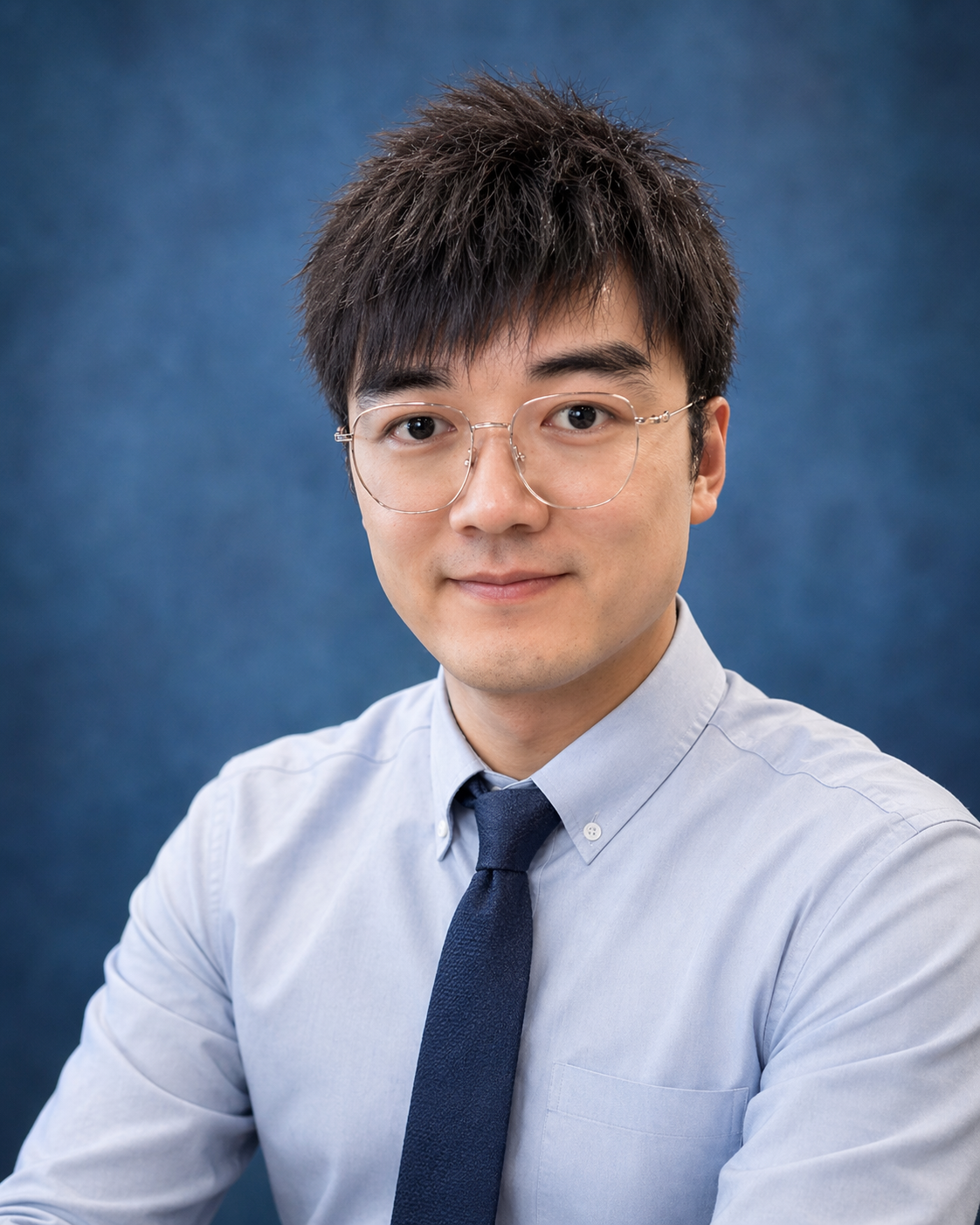

About me
I am a third-year Ph.D. student at the School of Computer Science, Fudan University, under the supervision of Prof. Yu Cheng. I received my B.Eng. in Computer Science and Technology from Harbin Institute of Technology in 2023. I was a visiting student at the University of Illinois Urbana-Champaign from January to May 2026, and have also conducted research at the Shanghai Artificial Intelligence Laboratory and The Chinese University of Hong Kong.
My research is centered on large vision–language models, spanning visual agents, multi-step reasoning, hallucination mitigation, and multimodal safety. I am currently a research intern at the Multimodal Model Department, Tencent Hunyuan, selected for Tencent's “Project Up” Talent Program (青云计划) and the Rhino Bird Elite Talent Program (犀牛鸟精英人才计划). My work has appeared at ICLR, CVPR, and ACL. I also serve as a reviewer for NeurIPS, CVPR, ACL, and TPAMI.
I am always open for research discussions and collaborations. If you are interested, please feel free to contact me via email.
News
- [2026] Joined the Multimodal Model Department, Tencent Hunyuan as a research intern under the “Project Up” (青云计划) and Rhino Bird Elite Talent (犀牛鸟精英人才计划) programs.
- [Jan. – May 2026] Visiting Student at the University of Illinois Urbana-Champaign (UIUC).
- [2026] Our paper AdaReasoner has been accepted at ICLR 2026.
- [Sep. 2025] Joined The Chinese University of Hong Kong as a Research Assistant, working on visual agents.
- [2025] Received the BD Scholarship.
- [2025] Our paper on long-tail representation in LVLMs has been accepted at CVPR 2025.
- [2025] PRMBench accepted at ACL 2025 Main.
Experiences
- [2026.5 – Present] Research Intern, Multimodal Model Department, Tencent Hunyuan (Project Up 青云计划 & Rhino Bird Elite Talent 犀牛鸟精英人才计划)
- [2026.1 – 2026.5] Visiting Student, University of Illinois Urbana-Champaign (UIUC)
- [2025.9 – 2026.1] Research Assistant, The Chinese University of Hong Kong
- [Feb. 2023 – Aug. 2025] Research Intern, Shanghai Artificial Intelligence Laboratory
Education
- [2023 – Present] Ph.D. Candidate in Artificial Intelligence, Fudan University
- [2019 – 2023] B.Eng. in Computer Science and Technology, Harbin Institute of Technology (96.2/100, ranked 3/92)
Research Interests
- Visual agents and multimodal tool use
- Multi-step reasoning for LLMs and VLMs
- Reliability of large vision-language models
- Hallucination mitigation and evaluation
Selected Publications
AdaReasoner: Dynamic Tool Orchestration for Iterative Visual Reasoning
A unified framework for data curation, reinforcement learning, and evaluation of tool-planning models. The model exhibits self-adaptive tool use and achieves substantial gains on visual spatial planning tasks.
PRMBench: A Fine-grained and Challenging Benchmark for Process-Level Reward Models
A comprehensive benchmark for process-level reward models with 6,216 curated samples and 83,456 step-level labels, revealing key limitations in current PRMs.
From Head to Tail: Towards Balanced Representation in Large Vision-Language Models through Adaptive Data Calibration
An in-depth analysis of the long-tail problem in current LVLM training data, with a fine-grained adaptive calibration framework for more balanced representation learning.
Mitigating Multilingual Hallucination in Large Vision-Language Models
An early approach for mitigating multilingual hallucinations in LVLMs, with an analysis of the main factors that drive non-English hallucination behavior.
GenReasoner: Generative Visual Agent Planning
Studies whether tool-planning capabilities learned under specific task-tool combinations can generalize to unseen tasks, with a focus on transferable visual agent planning.
Awards
- [2025] BD Scholarship
- [2022] Finalist, The Interdisciplinary Contest in Modeling (COMAP)
- [2021] First-Class People's Scholarship
- [2020, 2021, 2022] National Encouragement Scholarship
Service
- Reviewer: NeurIPS 2024, 2025, 2026; CVPR 2025; ACL 2025, 2026; TPAMI
Languages
- Chinese: native
- English: proficient
- Japanese: working proficiency